Brushstrokes of the Stratum: The Time of Two Meters and the Rupture of the Cube
In the ancient capital of Gyeongju, one must first excavate two meters of time into the earth before raising any structure above ground. Near Gyerim Elementary School, in the trial excavation site revealed before a familiar alley vanished to make way for a new apartment complex, the archaeologists’ brushes delicately sweeping away the earth were engaged in more than a mere civil engineering survey—it was a silent performance confronting primordial time long suppressed beneath the soil.
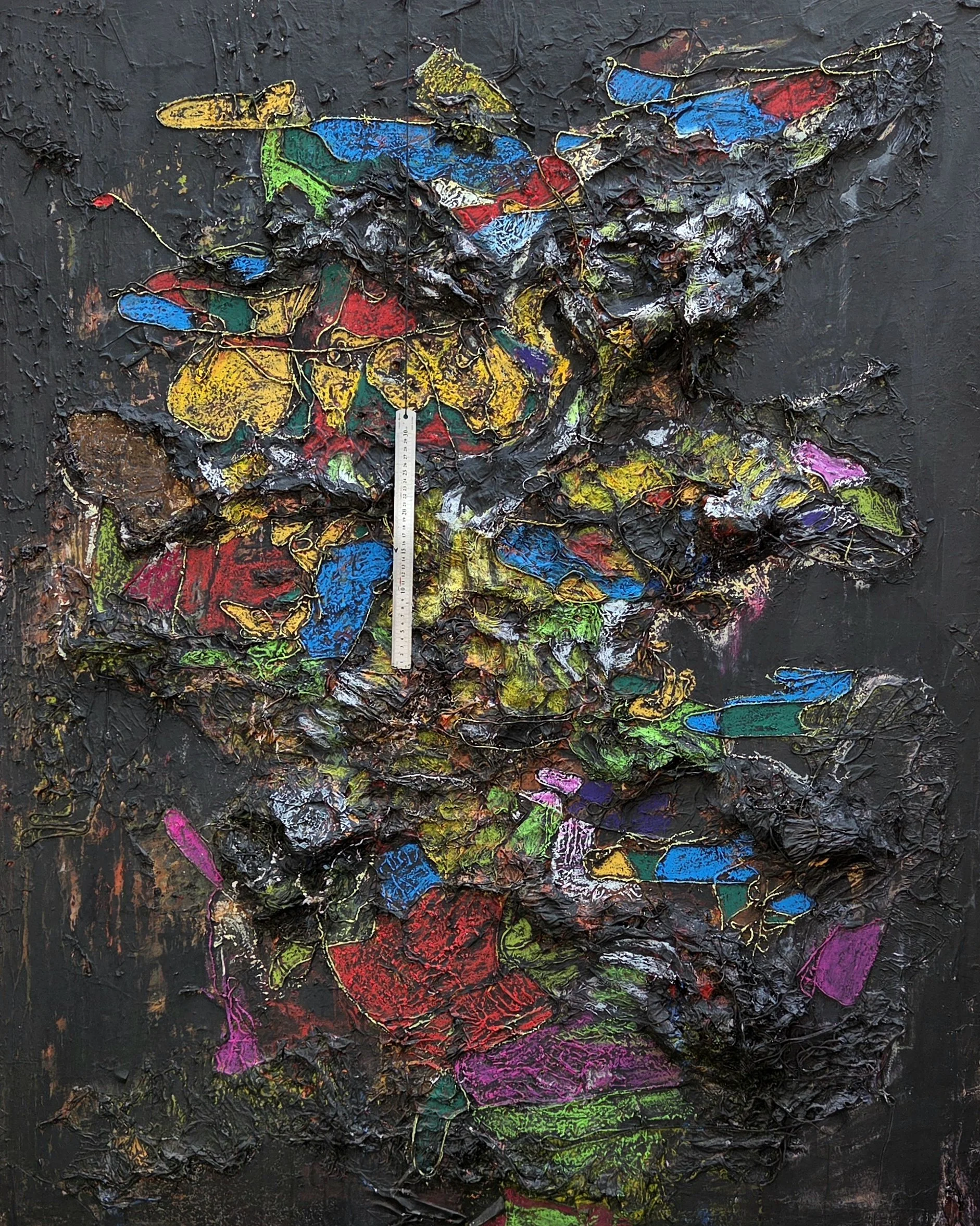
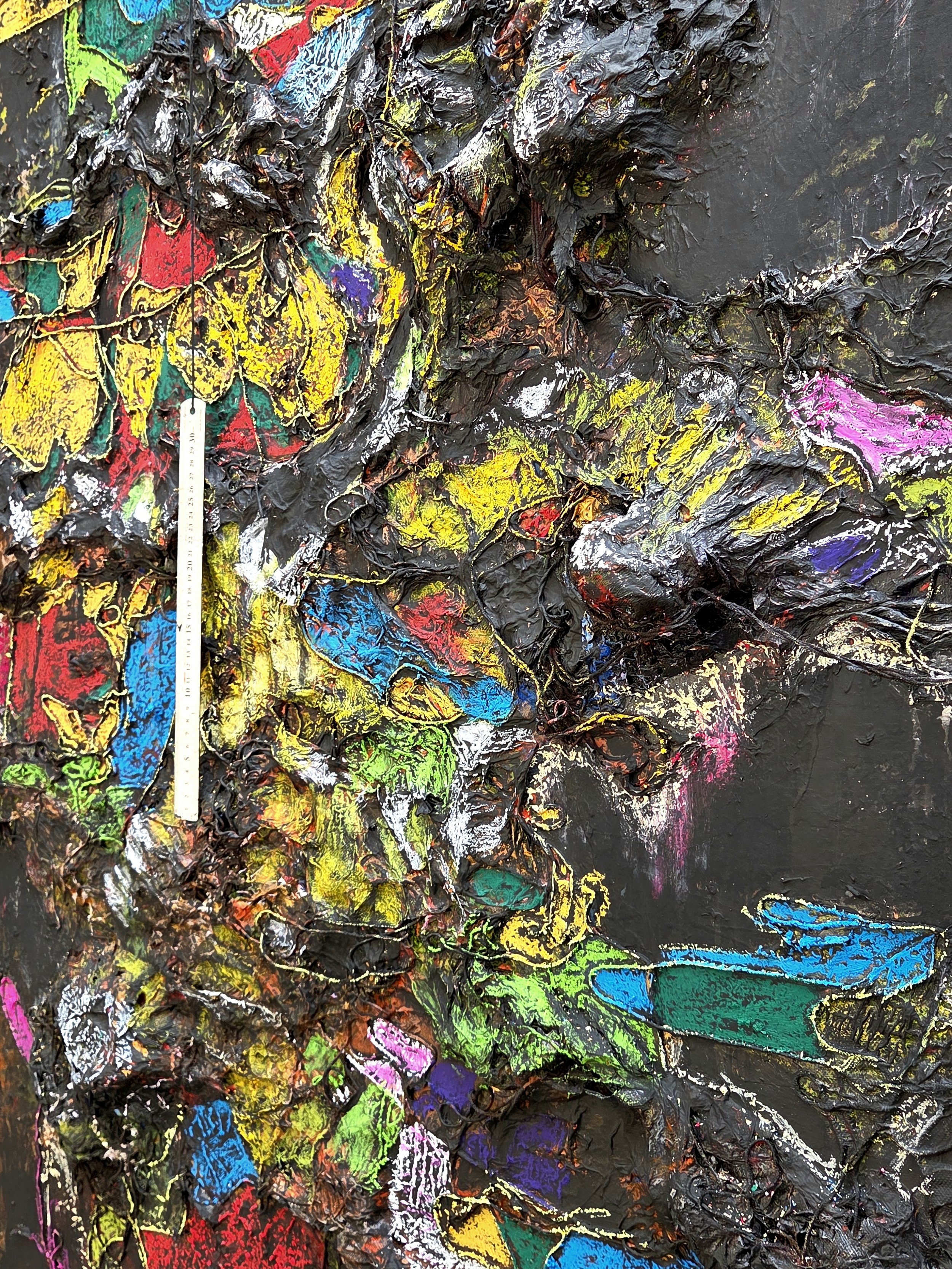
The rectangular trench carved out for excavation functions as a contemporary 'Cube' designed to enclose and standardize time. The city covers the surface with sleek asphalt, attempting to taxidermize the past within blocks of earth quantified into cold metrics. Yet, the rugged materiality of earth accumulated thickly across the canvas and the intense primary colors rupturing through its fissures refuse to remain tamed within the confines of that orthogonal box.
These raw hues summon the wild energy of Bihyeongrang and his spectral companions (Dokkaebi) from Samguk Yusa (Memorabilia of the Three Kingdoms). Unlike the daylight city governed by the rigid codes of the royal court, this was Bihyeongrang’s inscrutable nocturnal power—slipping out of the palace gates each night to summon phantoms across the Hwangcheon hills and erect massive stone bridges overnight. It is the unvarnished vitality buried deep within the earth whenever the daytime reason and institutions fell asleep. Much like the impulses of prehistoric cave paintings incised onto rocks before normalized points, lines, and planes were formulated, the vivid colors revealed as the skin of the soil is scraped away breathe a primordial vigor that modern rules can never domesticate.
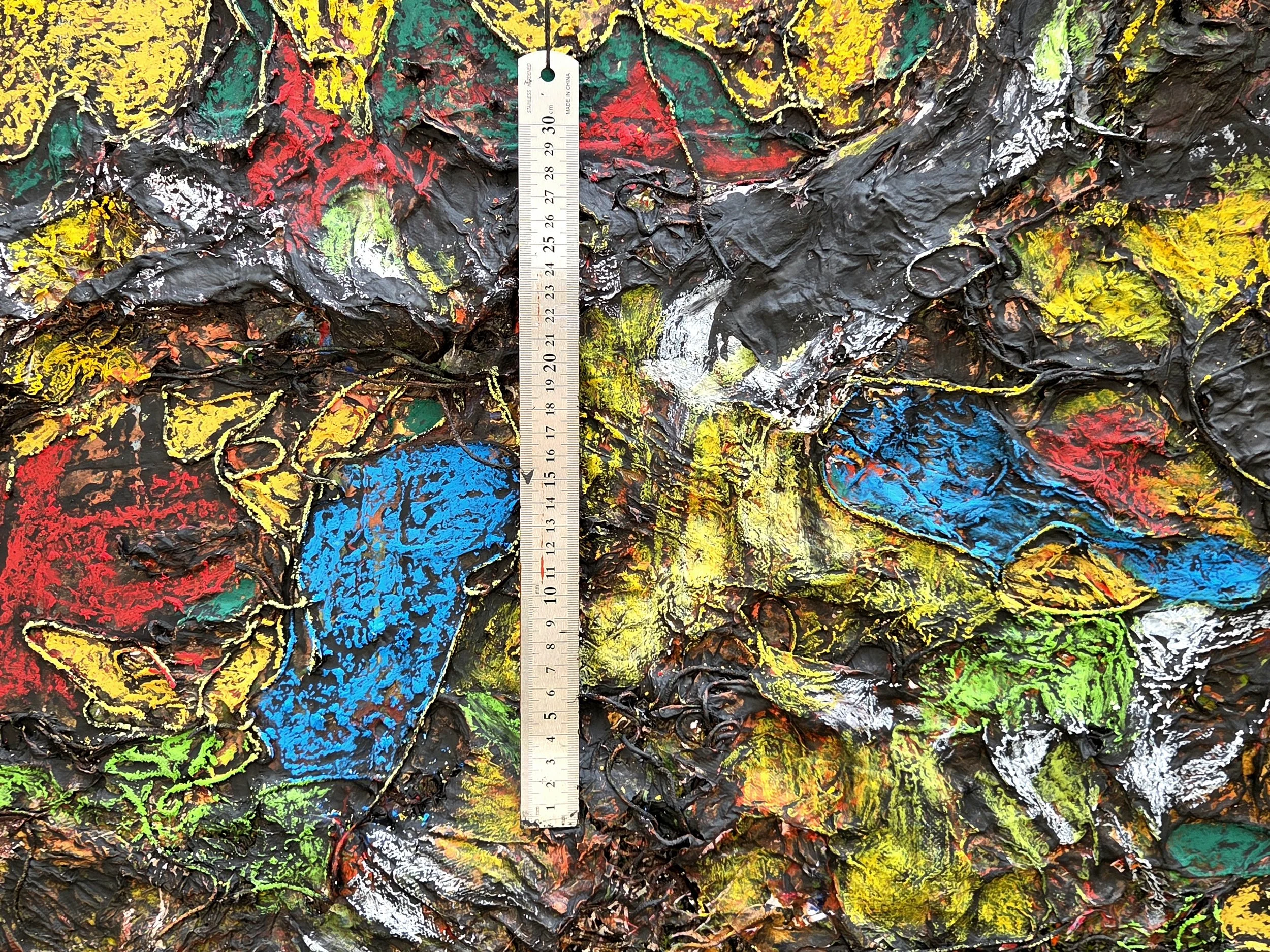
The 30cm stainless steel ruler hung vertically at the center of the canvas represents the cold metric of the contemporary city, enforcing altitude restrictions and partitioning space into numerical values. Yet the moment it collides with the dense, coarse materiality of earth and pigment compressed across millennia, this metal instrument loses its authority and becomes powerless. It is an abyss two meters below that no modern measure can gauge or confine. Exhuming these spectral fragments of time that burst through the edges of the taxidermied cube, I rupture them vividly across the canvas with the tip of my brush.